People touching hands

News

Stay up to date with the latest news and announcements from MCLS

253 Results

Insights from Executive Director Scott Garrison - November 2026

Insights from Executive Director Scott Garrison - November 2026

Libraries are built from stories, and they embody the power of stories. Stories are at the heart of the relationships libraries and everyone they serve need to succeed. At the MCLS annual member event on October 9, approximately 70 total attendees focused on how libraries can tell stories effectively from the perspectives of data storytelling and crisis communication. The path to MCLS’s first in-person event in ten years is made up of many stories from the astonishing number of changes and challenges libraries have seen since 2016. We at MCLS have collected a lot of data in the last few years that are helping us tell new stories, from our strategic plan development and implementation through recent surveys and other work our Board and staff have done. Following some stories from MCLS Board members Mike Hawthorne and Josh Petrusa that set context for our event, Professor Kate McDowell from the University of Illinois Urbana-Champaign’s School of Information Sciences delivered an inspiring keynote based on her ten years of work on data storytelling including the Data Storytelling Toolkit for Libraries (DSTL) and her 2025 book Critical Data Storytelling for Libraries: Crafting Ethical Narratives for Advocacy and Impact. Kate’s book weaves together many helpful strands that can help us build a positive future, and I recommend it very highly to anyone seeking to improve how they combine data with narrative to tell their library’s stories. In her keynote, Kate highlighted the Storytelling Triangle between a story, its teller, and its audience, noting that we should be mindful whose role it is to tell a particular story. Each relationship in the Triangle is a dynamic one that can be influenced by whether a story is new or being repeated by the same or a different teller, and an audience’s attitudes toward the story. Kate established that critical data storytelling “requires understanding power dynamics from a storytelling perspective,” an idea dating back to the late-19th century women who introduced using empirical data in librarianship in a systematic way, and who were not allowed to present at conferences at the time. Kate pointed out the differences between data, story, and information with the straightforward idea that “data in story context becomes information.” In her keynote (and in much greater detail in the book), she offered thought-provoking ideas about who owns data (and goals for using data) versus stories (and motivations for telling them), with examples relevant to academic and public libraries. Kate laid out the Data Storytelling Life Cycle as a framework to dealing with struggles libraries have had including translating data into stories and capturing those stories for outside audiences. Data Storytelling Life Cycle (McDowell, 2026; used by permission) [size this image so it’s big enough to read online and scale it correctly] The Life Cycle captures the ideas that many libraries collect and store data without really engaging and creating meaning, and that we need to make our data our own through all four steps in the cycle. Kate then offered suggestions for to how to build stories that last and should be retold over time, such as how libraries have ended late fees to promote equitable access. She explained the cycle of story across time, from telling, to listening, to retelling, as well as a story’s chronological structure from an inciting moment though rising action, to a climax or turning point and falling action to a resolution or denouement. She cited the example of a campaign to expand a taxing district for a library whose district was smaller than its counterpart school district. Though the campaign failed, the data the library used to tell their story along the “upward arc” of rising action in their campaign increased awareness that kids outside the taxing district could come to and use the library even without a library card. Before closing, Kate laid out three Structure Narratives from the DSTL and pointed out where data collection occurs in each: Transformation – a “hero’s journey” toward overcoming obstacles and creating change Continuity – restoring stability following disruption (with recovery, adaptation, and learning) Discovery – understanding complexity via a process of asking questions, gathering information, and building and sharing the knowledge that results from the process Next, communication expert Thom Fladung led a workshop titled Putting Crisis Communications In Play, to help libraries be prepared in case of “explosive, unplanned visibility” that can damage our most important asset: our reputation. Thom’s experience as an investigative reporter earlier in his career has positioned him very well in his current role as Vice President and Chief Counselor at Hennes Communications (a division of AKCG Public Relations Counselors). I hope you find the following summary of what Thom shared on October 9 useful. Rather than summarizing all of the valuable information he offered, please see below for images from a pocket-sized card with tips and more that Thom distributed and very kindly granted us permission to include in this piece. Thom began with the idea that while communication can be the last thing we think about during a crisis, it can save our reputation as word spreads and the community awaits our response. He emphased how important it is to act promptly and communicate clearly and honestly in a crisis using the rules of the Damage Control Playbook: Tell the truth (“no comment” can translate to “guilty”) Tell it first Tell it all (i.e., all that you know to be true) Tell it fast Tell it to the people who matter most Thom shared stories from his journalism experience to illustrate how the media works faster and more iteratively than ever before in the age of social media and search engine optimization. Media often run with what they have even if it does not represent a balanced view of a story. He then turned to a set of five steps to manage outrage that often occurs in a crisis: Validate concerns: there is almost always a valid concern to acknowledge Acknowledge past mistakes: don’t pivot away from the past more quickly than your stakeholders can – it’s their decision when to move on, not yours. Be prepared to repeat how you’re working to fix past mistakes, if needed. Acknowlege current problems: iflibrary leadership does not demonstrate that they know there’s a problem, stakeholders may become upset Give credit: wherever possible, thank anyone who is helping resolve a crisis Share control: the higher the outrage, the less trust there will be in you to solve a problem – let others validate whether you’ve solved it Thom laid out a “3-V framework” for bad news stories: the villain who caused the problem, the victim, and the vindicator who brings it to light for accountability. He also offered detailed strategies and tips for communicating via social media, pointing out the importance of having conduct rules for all communication including social media and how to handle comments effectively. Thom cited Traverse Area District Library’s Social Media Policy as a great example. In a crisis, he recommended putting the truth on the library’s website and making a simple social media post pointing to the website because a library has greater control over its website. To help defuse a social media storm, ask vocal commenters for a conversation away from the platform. Libraries should ask the following questions when they identify an online reputation threat: Where did the threat originate? Are more people continuing to talk about this situation? Has the mainstream media begun covering this situation? What is your understanding of what led to negative information? Following tips on determining the influence of a threat and best practices for responding, Thom turned to some media relations guidelines and interview control tools if we find ourselves contacted by the media. He staged some mock media interviews with brave event participants, seeking observations from the larger group. Thom closed with key principles for developing a crisis communications plan: Ask “who says what to whom, how and when?” Who is on your library’s crisis communication team, and what protocol/procedures will you follow to activate that team? Conduct a vulnerability audit with the library leadership team, brainstorming and ranking potential crises by how likely they are Build messages from the audit, including media statements, website content, and social media posts Make sure you identify your key stakeholders and audiences, know your social media instructions, passwords, and guidelines, and keep contact information up to date As promised, here is the card Thom offered workshop participants: © Hennes Communications LLC; used by permission I’ll close here by thanking our annual member event planning committee, the staff and Board members who played a part in making the event happen, our hosts at St. Joe County Public Library, our fine speakers, and all member library staff who attended (especially those who completed our evaluation survey). Holding our first in-person event in many years was a lot of hard work, and truly a labor of love for our members. If you were with us on October 9, I hope you’ll agree that our event was a great example of how MCLS brings libraries together to engage with valuable strategies and approaches, and of how together, we empower a strong library community. I also hope to see you at our next annual member event on April 30, 2027, back at St. Joe County Public Library in South Bend, IN. Until then, I encourage you to share questions, ideas and thoughts with me at garrisons@mcls.org.

November 2, 2026

Amplifying scholarship and learning opportunities: connection, collaboration, and trust

Amplifying scholarship and learning opportunities: connection, collaboration, and trust

We recognize that many of our members are engaged in scholarly activity either as part of job requirements or because of personal/professional interest. One of the benefits of being part of a larger library community is the opportunity to contribute to and learn from other library colleagues via presentations and publications. We’d like to highlight and amplify two regional opportunities for library scholarship and learning, and one national venue, all of which celebrate collaboration, trust, and partnership in our field. As you pursue your goals as a learner, reader, writer, or presenter, here are some opportunities to consider:  Readers, authors, and partners: Crossroads: The Journal of Indiana Libraries  This is a peer reviewed, open access scholarly journal published by the Indiana Library Federation (ILF) in partnership with Indiana Academic Library Association (IALA), Indiana Black Librarians Network (IBLN), Academic Libraries of Indiana (ALI), and Private Academic Library Network of Indiana (PALNI). It supports the mission of ILF to lead, educate, and advocate to advance library services for the benefit of Indiana residents by publishing high-quality scholarship that supports Indiana libraries. As Indiana is the Crossroads of America, it is the goal of this journal to be the Crossroads of Indiana Librarianship.  Crossroads is the successor to Indiana Libraries, the former journal of the Indiana Library Federation.  Learners and presenters: Michigan Academic Library Association (MiALA) call for proposals  Academic libraries are facing a time of uncertainty and complex challenges, and how we choose to respond will influence what lies ahead. Radical Trust: Cultivating the Future Together invites us to consider trust as a deliberate choice in shaping our future: trusting our colleagues, communities, and shared capacity to adapt, collaborate, and grow. Cultivating the future requires intention, and this year’s conference will acknowledge the realities academic libraries face while celebrating the relationships, partnerships, and commitments that sustain our work. The future is not something that happens to us; it is something we can create together through the courageous and radical act of trusting one another. MiALA invites you to submit a presentation proposal for the conference, which will be held May 16-18, 2027, at the Morris Lawrence Conference Building on the campus of Washtenaw Community College in Ann Arbor, MI. Participation from librarians, library staff, LIS students, and administrators from all types of academic libraries is welcomed. MiALA membership is not required to submit a proposal.  Collaborators and partners: Collaborative Librarianship  This journal came to fruition around the scholarship of collaboration and sharing of resources and expertise within and between libraries. Increasingly, libraries are moved to seek partnerships with other libraries, with other organizations in the information and technology fields, with other entities in our institutions, and with other groups and enterprises in our communities. While partnerships of all sorts have had a long history in the field of librarianship, today, as never before, there is greater urgency to develop and exploit library partnerships, and to think widely and creatively on new types of—and potentials for—partnerships. 

November 2, 2026

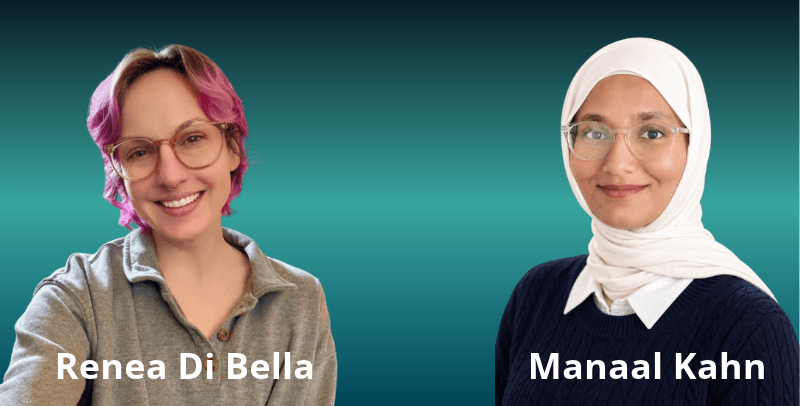
Photos of Renea Di Bella and Manaal Kahn

MCLS welcomed two new Administrative Assistants in September 

On Sept. 28, 2026, MCLS welcomed Renea Di Bella and Manaal Kahn as our new Administrative Assistants. You may engage with them through RIDES and MelCathelp tickets, when you call our main phone line, and when they host our virtual workshops and webinars. Among other duties, they also help process membership forms and contact management data. When you have the pleasure of interacting with them, please extend a warm welcome to MCLS! In the meantime, the interviews below provide deeper insight into Renea's and Manaal's backgrounds and aspirations. Meet Renea Di Bella Tell us a little about your background. How did you get started in libraries? I am a former middle school social studies teacher with a master’s degree in curriculum and instruction. Through writing curricula, I realized a passion for literacy, research, and archival preservation. To pursue this passion further, I applied (and was admitted) to the MLIS program at Wayne State University, to begin Fall 2027. In the interim, I started working in libraries to prepare myself for my studies and future career. I worked previously at the Detroit Public Library and am excited to bring my passion and interests to MCLS.   What motivated you to take on this new role? This role merges several of my interests and talents. Teaching provided me with many of the skills I will need to fulfill my role, while the services MCLS provides its members align with my passion for literacy and public access to information. This is also an opportunity for me to get to know the needs of libraries better as I transition into a career in Libraries and Information Science.   What do you like to do when you aren’t working? I like to read and travel. I like to do several different types of art and crafts. I also spend an inordinate amount of time just watching my cats exist.  Do you have any hidden talents or hobbies? I am a visual artist; I make multimedia collages and sculptures.  What is the best advice you have ever received? From my aunt: “Don’t dread getting older because it’s a privilege not everyone gets.”  Meet Manaal Khan Tell us a little about your background. How did you get started in libraries?  I worked in the Processing department at the Dearborn Public Library, where I supported MeLCat requests by printing pull lists from the ILS, retrieving materials from shelves, printing RIDES labels, and preparing items for RIDES delivery. I also processed materials for circulation, and my favorite part was processing holiday materials! My background also includes instructional design, literacy tutoring, and technical writing, where I focus on how to break complicated information into clear steps and help people apply what they learn.  What motivated you to take on this new role?  I am motivated to bring together my library experience, communication skills, and interest in helping others apply what they learn. Working with MeLCat and RIDES showed me how libraires work together to connect people with resources, and I am happy to support that work at MCLS.  What are you most excited to start working on?  I am excited to combine my previous experience with RIDES and MeLCat. I value literacy and libraries make literacy accessible to all. MelCat is an amazing part of the library network, giving people access to more resources than just their local libraries. I'm excited to support member libraries and make information accessible. As I grow, I'd love to use my instructional design and writing skills to help make instructions, resources and training easier to follow and apply.  What do you like to do when you aren’t working?   I enjoy learning languages and different subjects, and geographic information systems (GIS) is my next area to explore. I like to spend time with my nephew, play Zelda, sketch places in my neighborhood, read, cook, and watch anime and fantasy shows/movies, like the current Percy Jackson series. I also enjoy going on walks and taking photos of trees.  Do you have a favorite author, book, or genre? My current favorite books are Days at the Morisaki Bookshop by Satoshi Yagisawa and The Invisible Library series by Genevieve Cogman. 

November 2, 2026

Vendor Spotlight: librarian support and resources from Sage

Vendor Spotlight: librarian support and resources from Sage

We know it can be a challenge to stay on top of all the features and functions across a wide array of electronic resources. Sage provides numerous resources to help libraries manage, promote, and make the most of their collections, benefiting your learners and researchers.   Librarian Resource Center - These resources provide quick access to materials to help you learn about, promote, and embed our content, making the most of your institutional access.  Sage webinar schedule and Video tutorial library - Learn more about specific products, tools, and features  Faculty resource center - Share these with faculty members to support teaching and student access (includes sample assignments)  Blog for news, events, and insights - Stay current with updates and the latest news  Sage product spotlights include:  Business Cases Complete - Sage Business Cases brings business to life—inspiring students to develop their own best practices and prepare for professional success. The first significant, discipline-wide digital collection tailored to library needs, Sage Business Cases is highly interactive, faculty friendly, and allows for instant and lasting IP access, rather than the usual per-case purchase model.  Data Core - Sage Data Core simplifies data analysis by providing an all-in-one resource for social science researchers and students to access statistics relevant to their areas of study (16 major subject categories). This dynamic resource allows users to easily scan and search an extensive repository of harmonized and structured statistical data, compare and contrast variables of interest, and create customized views in tables, maps, rankings, and charts. Sage Data supports data literacy, allowing students to create their own data visualizations, and supporting extensive download capabilities.  Sage Documentaries - Sage Documentaries harnesses the transformative power of documentary storytelling to enrich academic learning. This new series of curated collections will illuminate complex social, cultural, and political issues while amplifying diverse voices and lived experiences. Built to support inclusive, interdisciplinary pedagogy, the films are designed to provoke critical thinking, encourage reflective inquiry, and foster media literacy across disciplines.  For more information or a product quote, contact services@mcls.org or 517-939-1382. 

November 2, 2026

MLA Handbook Plus and Momentix logos

Announcing partnerships with MLA Handbook and Mometrix 

MCLS is pleased to offer our members discounted pricing on MLA Handbook and Mometrix subscriptions.   MLA Handbook Plus supports new and seasoned researchers and writers, students, and instructors as an institutional resource for foundational skills and professional development. A comprehensive repository, the site includes the full text of the MLA Handbook as well as companion guides, video courses, and other resources from the MLA including Manual MLA, a Spanish language translation of the MLA Handbook; and the MLA Guide to Digital Literacy, updated to include AI guidance. MLA provides MCLS member libraries with a 12% discount.  New content planned for MLA Handbook Plus in 2027:  MLA Guide to Presentations and Public Speaking (full text plus videos exclusive to Plus)  MLA Guide to Persuasive Writing (full text)  new citation examples for a variety of source types  interactive practice template for creating works-cited-list entries from the MLA core elements  new annotated sample papers  Learn more about MLA Handbook Plus by viewing this video demo.  Mometrix Test Preparation develops study resources that help learners prepare for a broad range of academic, admissions, career, licensure, certification, and civil service exams. In addition to serving individual learners, Mometrix partners with libraries, colleges and universities, workforce programs, and other organizations that want to provide broad test preparation support through an easy-to-use digital platform. Our institutional focus is on delivering practical, high-value content that is simple to implement, administer, and promote. 

November 2, 2026

thumbnail

TALK makes ALSC National Institute debut in Buffalo, NY  

The Association for Library Services to Children held its biennial Conference in Buffalo, NY October 1-3, and TALK: Text & Learn for Kindergarten was among the vendors showcased. ALSC National Institute brings together children's library staff, educators, literacy experts, authors, illustrators, publishers, and more to focus on creating healthy and successful futures for all children in libraries. While there were a variety of resources available for attendees to explore, TALK grabbed the attention of many. One person, Elizabeth Hurtado, Children’s Librarian at Springdale Public Library, Arkansas effectively identifies in her ALSC blog post, Three Resources I’m Bringing Home from ALSC Institute, exactly what we’re hoping to convey to patrons: early learning is linked to everything we do every day. Elizabeth explains, “The best part? The activities are simple enough to fit into everyday life, and participating libraries can use TALK to connect families with local events, programs, materials, and other early literacy services. As a children’s librarian, I love resources that help parents see that literacy doesn’t always require a special activity or a pile of books. Sometimes, it happens while you’re cooking, driving, playing, or talking about a family photo.”  TALK, built for libraries from the research-based Every Child Ready to Read® program, promotes the practices of talking, singing, reading, writing, and playing to build early learning skills with children from birth to age 6. TALK subscriptions are available for public libraries of any size, library cooperatives, consortia and groups, and statewide implementations. If you would like to find out more about TALK: Text & Learn for Kindergarten, please send queries to talkhelp@mcls.org. Request a quote here. 

November 2, 2026

thumbnail

Linked Data Users Group: Fall 2026 All-Users Group Meeting

Join MCLS’s Linked Data Users Group for our virtual, fall All-Users Meeting on Friday, Nov. 20, 1 p.m. Eastern (12 p.m. Central) featuring the presentation "Reconnecting Indigenous Archives Through Linked Data: Transforming Indigenous Archival Search." The Mellon-funded Transforming Indigenous Archival Search (TIAS) project is exploring how linked data can help reconnect Indigenous archival materials dispersed across institutions and improve their discovery by community researchers. Building on earlier work with the Social Networks and Archival Context (SNAC) Cooperative, this new phase looks more broadly across linked-data systems, standards, vocabularies, and tools for culturally responsive archival discovery. TIAS project team members will discuss current work with SNAC, Wikidata, OpenRefine, Tribal entity data, and related authority systems, along with the larger questions the project is asking about interoperability, reparative description, and the reunification of Indigenous collections. Participants include: Diana E. Marsh (Associate Professor, University of Maryland College of Information)  Stephanie Sapienza (Digital Humanities Archivist, Maryland Institute for Technology in the Humanities, University of Maryland)  Ugoma Smoke (Metadata Specialist, University of Maryland College of Information)  Register now

November 2, 2026

thumbnail

Congratulations to our newest Certificate of Library Staff Development recipients (November 2026)

The following library staff members have earned Certificates of Library Staff Development by attending workshops through MCLS!   Basic Essential Workplace Skills Certificate   Tresa D. Fore, Wayne County Community College District, MI  Terri Hebert, Bridgman Public Library, MI  Bailey Jo Good, Wabash Carnegie Public Library, IN  Eliza Forrest, Traverse Area District Library, MI  Alisia Neubeck, Grand Valley State University, MI  Christina Meyers, Traverse Area District Library, MI  Lynnae M Christensen, Traverse Area District Library, MI  Are you interested in obtaining your Certificate of Library Staff Development? For details, see our website. Essential Workplace Skills tutorials are free to MCLS members as a member benefit! For questions, please email Gwen at training@mcls.org or call 517-220-9950.  

November 2, 2026

Member Spotlight: turning work into wins at Charlotte Community Library

Member Spotlight: turning work into wins at Charlotte Community Library

by MCLS Engagement Strategist Laura Warren-Gross  When I visited Jessica Sulecki, the director of Charlotte Community Library, she shared that she keeps a wish list. The list contains both resources and programs to enhance the library. However, Jessica explained that she was not just wishing for things, but also putting a plan to fund those wishes into action.  Jessica told me that Charlotte has folks living in facilities such as retirement communities, adult foster care homes, and nursing homes who cannot come to the library. Her wish was to provide consistent outreach to these locations, so she applied for LSTA grant funding. The library was awarded grant funds, and the van has been purchased and is currently being outfitted. Just imagine all the people who will now have access to library materials and services! In addition, an Outreach Coordinator was hired who will oversee the mobile services.  As if the Mobile Unit was not enough of a dream, the library staff also received a grant from the Charlotte Area Recreation Co-op to fund a Sensory Garden. Included will be raised beds, tools, picnic blankets to sit on during story time, and gardening programs. The community will surely be excited about this new space.   In addition to grant funding, the library had a millage request on the Aug. 4, 2026 ballot and it passed. This will help fund the library and additional wish list items for ten years. Jessica said, “We are very grateful to everyone who went out and voted to support the library! We are so excited to continue to serve our community for another ten years!”  MCLS is happy to celebrate the successes of our member libraries. Has your library recently benefited from a grant? Passed a millage? Received a generous donation? Engagement, Consulting, and Training team members would love to hear about your library and share your story. Contact us at engagement@mcls.org. 

November 2, 2026