Site LogoClose circle
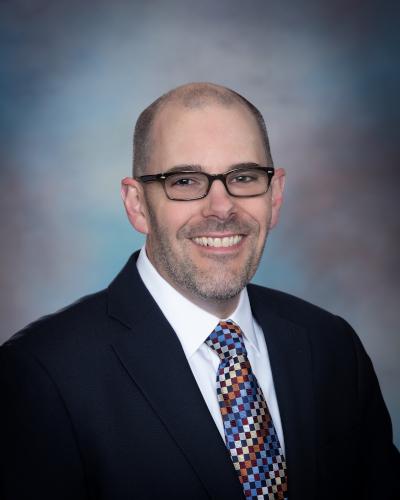
Director

News

Insights from Executive Director Scott Garrison – May 2026

May 1, 2026 | Director

This month, I have a simple ask: if you received a link to our MCLS member or partner/vendor survey and haven’t completed it yet, please do so before May 15. We want to hear from you about how we’re doing toward achieving our current strategic plan objectives and how we might improve.

Not sure if you got a link? Please check your junk folder for a message dated April 14 from the Indiana University Center for Survey Research (member survey) or from MCLS (partner/vendor survey), or a follow-up reminder.

In many cases, MCLS serves or works with multiple people in one library or organization – we want to hear from everyone who received a survey link! Our 10–15-minute survey includes rating and open-ended questions, and we hope you’ll take the time to answer as many questions as possible.

Together, we will continue navigating MCLS toward making a positive impact on the library community. Questions? Contact me at garrisons@mcls.org. In the meantime, thank you again for providing us with your very important input!
Related News

Logo

Insights from Executive Director Scott Garrison

Fall conference and event season is just around the corner, and I encourage you to engage with MCLS staff and Board of Directors members when our paths cross this fall. 

In September, we’ll have staff and Board members at the following conference: 

Upper Peninsula Region of Library Cooperation Annual Conference (September 21-22)  

  • Scott Garrison, Executive Director 
  • Andrea Ingmire, MCLS Board Michigan At-Large Representative 
  • Tara Kanon, MeLCat Support Specialist and Statewide Delivery Coordinator 
  • David Votta, Interim State Librarian of Michigan 
  • Lisa Waskin, MCLS Board Michigan Public Library Representative 

In October, find us at the following conferences and events: 

Association for Library Service to Children National Institute (October 1-3) 

  • Ann Kaskinen, TALK Program Coordinator 

MCLS Members Annual Event (October 9 – list below subject to change) 

  • Sarah Beaubien, eLicensing and Collection Resources Manager 
  • Sean Cwiek, IT Manager 
  • Jan Davidson, Library Consultant 
  • Megan Dudek, Shared Library Systems Manager 
  • Scott Garrison, Executive Director 
  • Gwen Haviland, Membership and Training Coordinator/Project Specialist 
  • Mike Hawthorne, MCLS Board Michigan Research Library Representative (President) 
  • Kalyn Huson, Association Coordinator and Administrative Specialist 
  • Tara Kanon, MeLCat Support Specialist and Statewide Delivery Coordinator 
  • Ann Kaskinen, TALK Program Coordinator 
  • Jenny Kobiela-Mondor, Library Strategist 
  • Kendra Lake, MCLS Board Michigan Academic Library Representative (Vice President) 
  • Beth McNeil, MCLS Board Indiana At-Large Representative (Secretary) 
  • James Orme, Financial Controller/Business Manager 
  • Stephen Patton, MCLS Board Indiana At-Large Representative (Treasurer) 
  • Josh Petrusa, MCLS Board Indiana Academic Library Representative 
  • Mary Ruthko, Marketing and Communication Specialist 
  • Pam Seabolt, Engagement, Consulting, and Training Manager 
  • Trista Smith, MCLS Board Indiana Public Library Representative 
  • Laura Warren-Gross, Engagement Strategist 

Michigan Museums Association Annual Conference (October 19-21) 

  • Chelsea Denault, MDPN Coordinator 
  • Maria Ketcham, MCLS Board Michigan Special Library Representative 

MCLS Board of Directors Meeting and Retreat (October 25-27) 

  • Megan Dudek, Shared Library Systems Manager 
  • Scott Garrison, Executive Director 
  • Kalyn Huson, Association Coordinator and Administrative Specialist 
  • Pam Seabolt, Engagement, Consulting, and Training Manager 
  • The MCLS Board of Directors 

Michigan Library Association Annual Conference (October 28-30) 

  • Jan Davidson, Library Consultant 
  • Scott Garrison, Executive Director 
  • Gwen Haviland, Membership and Training Coordinator/Project Specialist 
  • Andrea Ingmire, MCLS Board Michigan At-Large Representative 
  • Mario Johnson, Administrative/eLicensing and Collection Resources Assistant 
  • Tara Kanon, MeLCat Support Specialist and Statewide Delivery Coordinator 
  • Jenny Kobiela-Mondor, Library Strategist 
  • Jackie Licalzi, MeLCat System Administrator 
  • Mary Ruthko, Marketing and Communication Specialist 
  • Pam Seabolt, Engagement, Consulting, and Training Manager 
  • David Votta, Interim State Librarian of Michigan 
  • Laura Warren-Gross, Engagement Strategist 
  • Lisa Waskin, MCLS Board Michigan Public Library Representative 

Michigan Association of School Librarians Annual Conference (October 28-30) 

  • Scott Garrison, Executive Director 
  • Jenny Kobiela-Mondor, Library Strategist 

In November, we hope to see you at the following conferences and events: 

Charleston Conference (November 3-6) 

  • Sarah Beaubien, eLicensing and Collection Resources Manager 
  • Scott Garrison, Executive Director 

Indiana Library Federation Annual Conference (November 8-10) 

  • Scott Garrison, Executive Director 
  • Jenny Kobiela-Mondor, Library Strategist 
  • Laura Warren-Gross, Engagement Strategist 
  • Rain Smith, MCLS Board Indiana School Library Representative 
  • Trista Smith, MCLS Board Indiana Public Library Representative 
  • Jake Speer, State Librarian of Indiana 

Michigan OER Network Conference (November 13) 

  • Sarah Beaubien, eLicensing and Collection Resources Manager 
  • Kendra Lake, MCLS Board Michigan Academic Library Representative (Vice President) 

Finally, please save the date for the MCLS Annual Meeting: Tuesday, December 8 at 10:00 a.m. Eastern Time online via Zoom. Watch your email for registration information, and we’ll look forward to seeing you there. 

Our staff work hard representing MCLS at these and other conferences and events. We hope to see you and connect. Until then, contact me anytime at garrisons@mcls.org.

Have a question, idea, or story to share? Let us know

Aug 26, 2026

Read more
Logo

Insights from Executive Director Scott Garrison – July 2026

As usual, it’s a very busy time at MCLS as we close one fiscal year (FY) and begin another. Here are some updates about what’s happening as we move from FY2026 to FY2027.

Midwest Collaborative for Library Services exists so that:

Libraries can benefit by gaining expanded access to resources, innovative and stable library services, and collaborative efforts, worth the continuing investment of members and affiliates.

    1. Libraries have the support and tools to equip their staff with the skills and knowledge to succeed
      • Library staff have access to professional development in library skills
      • Library staff have access to engagement opportunities in the areas of concern to their community
    2. Libraries have access to innovative technologies and strategies that help them accomplish their goals
      • Libraries enjoy access to systems deployed at a scale they could not manage on their own
      • Libraries benefit from new systems and strategies they would be unable to experiment with on their own
    3. Libraries have the resources and tools to demonstrate their value within their communities and with decision makers
    4. Libraries have a compelling rationale of the value of collaboration and collective strategy, being part of the network of Indiana and Michigan libraries

Our Board used data from their 2025 survey of MCLS members to create this statement, the first major revision to the Board’s vision for MCLS since November 2017. The staff and I have already begun operationalizing elements of it as part of implementing the current MCLS strategic plan and we’ll have much more to say about that in future MCLS newsletters.

  • One major step in implementing our plan is gathering data about how we’re doing toward our objectives. I thank each of the 443 individuals from MCLS member libraries who took our spring strategic plan objective measurement survey! Our partners at the Indiana University Center for Survey Research sent a detailed survey results report in mid-June, and our management team and I are currently poring through the data our members gave us about where MCLS is strong and has room to improve so we can share what we learned.
  • One thing we’ve heard loud and clear is that MCLS members want more opportunities to engage with each other in person on topics that help them serve their communities. I hope you’ve marked your calendar for our members-only in-person event on Oct. 9 at the St. Joe County Public Library! Space will be limited, so watch for your invitation in early July and make sure your MCLS membership is current so you can join us for a thought-provoking day featuring a keynote by Dr. Kate McDowell, author of Critical Data Storytelling for Libraries: Crafting Ethical Narratives for Advocacy and Impact, and a workshop on crisis communication with Thom Fladung from Hennes Communications.

Our dedicated staff are hard at work on a variety of other projects including considering new vendors and products for our eLicensing program, adding new training members have requested, continuing to improve our accounting and financial processes and infrastructure, preparing to launch a new MCLS website, and many more. Together, we work to help libraries, partner organizations, and community initiatives grow and thrive however possible.

How does or could MCLS help your library? Let me know at garrisons@mcls.org.

Jul 1, 2026

Read more
Logo

Insights from Executive Director Scott Garrison

Recently, MCLS worked with EveryLibrary Institute and a team of students from the University of Michigan-Ann Arbor School of Information (UMSI) on a research project about the positive impact libraries make for each citizen on their lifelong learning and literacy journey. The project originated from summer 2025 discussions about how library associations and organizations could support Indiana and Michigan libraries collaboratively in a time of major disruptions and threats to library funding. Given different needs in each state, MCLS partnered on the project I describe below to focus on Michigan, and on a separate project focused on Indiana that is currently underway.  

I thank Lisa Waskin (MCLS Board of Directors, Superior District Library), John Chrastka (EveryLibrary Institute), Lori DonovanKristin Fontichiaro, and Anthea Josias (UMSI) for their work to conceive and support our project. Most importantly, I thank our UMSI SI699 student team, Madeline BrookmanEllie Franklin, and Sofia Frumkin, for all their work on the research and documents they produced (including an annotated bibiography, a course paper, a white paper, and a poster they presented at the UMSI Student Project Exposition on April 20). 

Following summer 2025 meetings between library association leaders, John, and myself, a group of Michigan library leaders and EveryLibrary Institute agreed on a need for data that can support other work to help libraries demonstrate their positive impact (such as developing policy briefs and other information). Through other conversations in fall 2025, UMSI approached our group about proposing a student research project for their SI699 Mastery Course, and we agreed to submit. Lisa drafted a project proposal in consultation with John and me. By early January, UMSI had accepted our proposal and it had been selected by our student team. John, Madeline, Ellie, Sofia, and I began meeting as a project team, and John created a work plan to guide the students’ work framed around the following elements: 

  • creating a Michigan literacy profile, a picture of literacy needs, gaps, and opportunities across the lifespan of residents and across communities based on a set of research questions; 
  • looking at Michigan library and literacy domains (i.e., foundational and reading literacy, digital and information literacy, workforce and economic literacy, and health and civic literacy) that impact individuals and groups across distinct life stages with unique needs, from early childhood to older adulthood; 
  • naming library contributions and capabilities for delivering literacy services to fosters stakeholder awareness, understanding, and awareness of what libraries can offer; 
  • and understanding current policy priorities of elected officials and stakeholders to “connect the dots” between their priorities and libraries’ interests and capabilities. 

Our project team agreed that the main project deliverables would be an annotated bibliography and an SI699 course paper. The students also decided to create a short white paper summarizing their findings and conclusions with references (in addition to a poster for the exposition). 

As their semester ramped up, our student team began an iterative approach to search the literature and find data from various Michigan state agencies and organizations, national resources, and foundations, with advice from John, help from UM-Ann Arbor Education Liaison Librarian Karen Downing and retired school librarian Kathy Lester, and frequent communication with each other. They also found a February announcement about literacy investments in Michigan Governor Gretchen Whitmer’s proposed FY2027 budget, which does not mention funding for libraries. 

Some of the student team’s key data findings were as follows (see references list below):  

  • Michigan currently ranks 44th in education nationwide (1) (lower than a ranking of 40th in 2022) 
  • 45% of Michigan fourth graders perform at or below basic reading achievement levels (2)
  • As one example of how students across Michigan are struggling to achieve literacy standards, only 14% of third graders in Detroit met or surpassed English Language Arts (ELA) grade level standards, and 91% of Detroit high school students scored below college readiness on their Standardized Aptitude Test (SAT) in all subject areas in 2023 (3)
  • There are significant opportunities to improve adult literacy in a variety of ways, including: 
    • Digital literacy to find trustworthy information on the Internet (4)
    • Increasing access to information for incarcerated adults (5)
    • Increasing health literacy to encourage adults to seek preventive care (6)
  • Studies in Michigan and North Carolina have found that students in schools with well-staffed school libraries with larger collections and librarian-classroom teacher collaboration scored higher in reading and literacy (7, 8)
  • Barriers to connecting libraries with positive literacy impacts include a decrease in certified librarian staff in Michigan schools (i.e., a 60% drop between 2003 and 2013) and smaller collection sizes (9)
  • Academic libraries’ digital literacy work can help students adapt to technology they will find in the workplace (10)
  • Literacy skills can positively impact a person’s physical health, and also their emotional and mental health (6) 
  • Exposure to works of fiction improves social ability and engages psychological processes that allow comprehension of a character’s personal experience (6)

In the course of their research, our student team came to recognize how vital libraries are for people’s development and success in their communities. Their course paper conclusion noted that: 

When libraries are well funded, their patrons are able to access countless resources, participate in civic engagement, and grow academically and socially. School libraries, public libraries, and university libraries…are all integral to the improvement of literacy rates… When libraries have increased numbers of qualified staff, larger collections, more resources, and are open for more hours, users are consequently more successful academically… Furthermore, library programs can be used for more specific scenarios for Michigan residents, including building up financial literacy and independence, as well as opportunities for learning and advancement for incarcerated populations (Brookman, Franklin, & Frumkin, SI699 course paper pp. 11-12). 

The students recommend strongly that Michigan provide more funding for libraries and see a significant opportunity given Governor Whitmer’s literacy priority. They also offered other advice to MCLS and EveryLibrary Institute, including looking beyond literacy in future work about the library’s benefits, monitoring political trends in Michigan and other midwestern states, and conducting primary research with library users. 

Moving forward from this great opportunity to work with enthusiastic and energetic students and EveryLibrary Institute, MCLS will continue pursuing opportunities to gather and share information about the positive impacts that libraries make for people across all stages of life. If you would be interested in learning more or getting involved, please let me know. We are interested in doing a similar project focusing on Indiana. 

I am always open to hearing ideas for how MCLS can support libraries. I hope to hear from you soon at garrisons@mcls.org  

References  

  1. Annie Casey Foundation. (2025, June). Education rank in Michigan. Kids Count Data Center. https://datacenter.aecf.org/data/tables/11425-education-rank?loc=24&loct=2#detailed/2/24/false/575,1096,2545,1095/any/22082. 
  2. Annie Casey Foundation. (2025, Jan.). Fourth grade reading achievement levels in Michigan. Kids Count Data Center. https://datacenter.aecf.org/data/tables/5116-fourth-grade-reading-achievement-levels?loc=24&loct=2#detailed/2/24/false/1096,1095,1729,871,573,36,867,38,18,16/1185,1186,1187,1188/11560 
  3. Data Driven Detroit. (2023). State of the Detroit child: Education. Data Driven Detroit. https://sdc.datadrivendetroit.org/profiles/0600000US2616322000 
  4. Gross, B. (2023). Safety net: weaving a web of resources to catch what one-shots can’t. Journal of Electronic Resources Librarianship, 35(2), 114-128. 
  5. Norton, N. & McGowan, M. (2023). Dictionaries denied: Information poverty in Michigan prison libraries. Journal of Civil Rights & Economic Development, 36(4).  
  6. Shulman, K., Baicker, K. & Mayes, L. (2024). Reading for life-long health. Frontiers in Pediatrics, 12. https://doi.org/10.3389/fped.2024.1401739 
  7. Burgin, R., & Bracy, P. B. (2003). An essential connection: How quality school library media programs improve student achievement in North Carolina. Hi Willow Research & Pub. https://www.lrs.org/documents/impact/NCSchoolStudy.pdf?lrspdfmetric=no 
  8. Rodney, M. J., Lance, K. C. & Hamilton-Pennell, C. (2003). The impact of Michigan school librarians on academic achievement: Kids who have libraries succeed. Library of Michigan. https://wayback.archive-it.org/418/20150104053005/http:/www.michigan.gov/documents/hal_lm_schllibstudy03_76626_7.pdf 
  9. Lester, K. (2021). Equity in literacy in Michigan. Teacher Librarian, 48(5), 38-42.  
  10. Cormier, M., Brock, T., Jacobs, J., Kazis, R., & Glatter, H. (2022). Preparing for tomorrow’s middle-skill jobs: How community colleges are responding to technology innovation in the workplace. Community College Research Centerhttps://eric.ed.gov/?id=ED619844  

Jun 1, 2026

Read more