
Writing a personal remembrance of Randy Riley is something I’d never expected I would do during my career. It’s difficult because his passing was sudden and is so much to process as someone who knew and worked closely with him. It’s also not difficult because of how grateful I am for him and everything he gave so many as a leader and colleague, and as a person. Through his work and in life, Randy made a profound, incalculable difference.
As many statements from organizations including the Library of Michigan (LM), Library of Michigan Foundation, Michigan Academic Library Association (MiALA), Michigan Library Association (MLA), and University of Michigan School of Information have noted, Randy was a singular and exemplary professional. Through his decades of devoted service to libraries and citizens throughout Michigan, he supported and led many important initiatives and fostered and promoted excellent access to a wide array of information. Randy’s affinity for genealogy and special collections tracked along with changing technology (e.g., in the form of LM’s support for the DPLA Michigan Service Hub, Michigan Memories, and the Michigan Digital Preservation Network [MDPN]). His strong support for MeL, the Michigan Notable Books program, LM’s grant programs, library staff professional development, and more endeared him to hundreds of libraries statewide. Randy was known as a relentless advocate who was generous with his time and help for libraries and library staff. He fielded as many questions and inquiries, visited as many libraries, and met with as many groups as he could. During the visits he and I made together, I marveled at his knowledge of what was happening at libraries of all sizes.
Randy also kept the Michigan library community connected to the wider profession through his work with the Chief Officers of State Library Agencies (COSLA) and as a member of the MCLS Board of Directors. He maintained countless long, positive, productive relationships with deep connections, including with some of us at MCLS, and called on his vast network to help the community through hard times when needed. People knew they had Randy’s support and answered his call in return whenever possible. His steady hand was invaluable through all the federal and state political and budget turmoil of 2025, and he rallied and guided many to engage and speak on behalf of MeL and other critical programs.
Randy was an articulate, incisive, thoughtful, passionate, and supportive constant presence on the MCLS Board for over ten years. As with so many other groups, it was rare that he’d miss a Board meeting. Though he would usually have plenty to say, he’d often let others in a larger group speak before weighing in on an issue. After we’d served on the Board together for a few years, Randy was one of the first people I called to seek advice about whether to apply for the Executive Director position. He urged me to go for it, and doing so changed my life. When I joined MCLS, our relationship evolved. We shifted from being fellow Board members to being the people who had the responsibility of leading the organization that made MeL possible and the organization that supported it. I came to see more facets of the complex person Randy was. I’d known him to be approachable, open, caring, direct, and funny. He also resisted anything he considered “touchy-feely,” and sometimes had an edge. He could be impatient when urgency to make a point got the better of him. I learned quickly that when he’d interrupt me mid-sentence, it was because he had an important point to make or question to ask based on his experience and thoughtful deliberation. He played such an important role that I always listened. When we were together, we would often have intense conversations on topics ranging from libraries to state and federal government to many aspects of life outside of work. He was usually much more concise in writing, often emailing a single sentence or question with the simple signature “r.”
Beyond libraries, we spoke often about our families, activities that included travel (e.g., family visits and his fishing trips), books he recommended, and our shared passion for music from many genres. Knowing Randy was nearing retirement, I asked for updates on his future plans. He’d say that he wanted to continue working while he could still “do cool things.” He wanted to guide newer LM staff including managers Michelle Bradley and David Votta. He also said that he didn’t want to end his career in bad times for libraries. He suggested that there were cycles of support for libraries and that we were either in or approaching a trough period. I appreciated how often he would urge us to stay strong and find ways to climb back up to a peak. As pained as Randy was by those who label librarians as “groomers” and “pedophiles,” he truly believed that libraries could have a bright future if librarians love and engage with people.
Randy used to joke that he had a “life sentence” on the MCLS Board until retirement (as the Indiana and Michigan state librarians each have a permanent Board seat). I knew the day would come when Randy would leave our Board, and I had not yet prepared fully for what it would mean to lose his voice, his experience, and his belief and faith in our organization through its successes, challenges, and potential. He told me during the November 2025 MCLS Board retreat that it would be his last, and I took that to mean that he was planning to retire in 2026 though he hadn’t announced anything official. I looked forward to wishing Randy the long, happy, and healthy retirement he so richly deserved.
On January 4, I learned Randy had passed the previous night. I was absolutely shocked and heartbroken.
I am heartbroken.
I am heartbroken for Randy, his wife Lori and their family and friends that he didn’t get to enjoy retirement with them. I am heartbroken for the LM staff, the Michigan Department of Education (MDE), and the greater library community having lost him so abruptly.
As I started working through an enormous sense of loss, I started writing about the impact Randy had made and my memories of him. The words just flowed. Many of my MCLS colleagues and I were fortunate to join hundreds of others who mourned him at LM on January 9. The memorial was as singular as Randy was. The heartfelt comments from many of Randy’s colleagues, friends, and especially his brother Mark, will remain with all who were there.
Today, I move between gratitude and grief. I’m glad for so very many things, and sad for so many others. I’m glad Randy was able to provide such stable leadership at LM and for the many boards and working groups on which he served. I’m glad he was able to celebrate MeLCat’s 20th anniversary last year. I’m especially glad that Randy got to enjoy 37 years of marriage to Lori filled with so many rich experiences including all the time spent with their children Sam and Madeline and pets including his beloved dog Louis (pronounced like the French kings). He was clearly so proud and supportive of each member of his family, and I’ll miss hearing him talk about them. I’m glad Randy got to spend so much time traveling to fish, visit family, and see his favorite bands. I’m glad for the times I got to see bands with him, including The Baseball Project at Bell’s Back Room in Kalamazoo and The Hold Steady at Brooklyn Bowl Philadelphia. I’m sorry I never got to play him the bass solo he’d needled me about for years, at a Lighting Matches show. I’m grateful for the time he gave me for our monthly breakfast meetings and so many other conversations. I’ll miss wondering what discussion topics were on his list and whether I was as ready as he was to dig deeply into them that day, which eyeglasses he’d be wearing, whether or not he’d have a beard, what book and music recommendations he’d offer, and looking for his truck in the parking lot to remind me how late I was for our meeting (he was remarkably patient about that). I’ll miss his simple parting words: “Talk to you.”
Randy Riley was one of the kindest, most generous and supportive colleagues I’ve ever had. Whether he’d say so or not, he truly cared deeply about many, many people in his life. It was just obvious. While he spoke so many meaningful words so easily at library events across the state and in meetings around the country, his actions spoke much louder.
I am one of the innumerable people for whom Randy made an immense positive difference. I am thankful for his work, contributions, vision, insight, experience, humor, and everything else he shared with us. I will honor his memory by striving to be the forthright and decisive leader he pushed me to be. I’ll do what I can to help the library community stay strong, pull together, and collaborate, as he urged. I’ll read more, including the Michigan authors he championed. I’ll seek out and stay open to new music and invite others to join me to see bands more frequently.
I’m glad Randy Riley was my colleague. Working with him made my professional life richer.
I’m glad Randy Riley was my friend. Knowing him made my personal life richer.
I’m taking peace and comfort from years of great memories of Randy. If you knew him, I hope you are also.
If there is anything I can do for you, please let me know at garrisons@mcls.org.
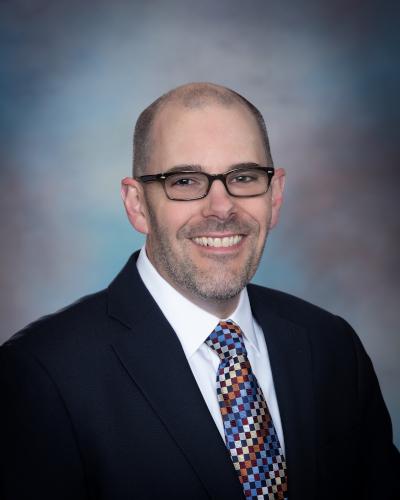
Fall conference and event season is just around the corner, and I encourage you to engage with MCLS staff and Board of Directors members when our paths cross this fall.
In September, we’ll have staff and Board members at the following conference:
Upper Peninsula Region of Library Cooperation Annual Conference (September 21-22)
In October, find us at the following conferences and events:
Association for Library Service to Children National Institute (October 1-3)
MCLS Members Annual Event (October 9 – list below subject to change)
Michigan Museums Association Annual Conference (October 19-21)
MCLS Board of Directors Meeting and Retreat (October 25-27)
Michigan Library Association Annual Conference (October 28-30)
Michigan Association of School Librarians Annual Conference (October 28-30)
In November, we hope to see you at the following conferences and events:
Charleston Conference (November 3-6)
Indiana Library Federation Annual Conference (November 8-10)
Michigan OER Network Conference (November 13)
Finally, please save the date for the MCLS Annual Meeting: Tuesday, December 8 at 10:00 a.m. Eastern Time online via Zoom. Watch your email for registration information, and we’ll look forward to seeing you there.
Our staff work hard representing MCLS at these and other conferences and events. We hope to see you and connect. Until then, contact me anytime at garrisons@mcls.org.
Have a question, idea, or story to share? Let us know!
As usual, it’s a very busy time at MCLS as we close one fiscal year (FY) and begin another. Here are some updates about what’s happening as we move from FY2026 to FY2027.
Midwest Collaborative for Library Services exists so that:
Libraries can benefit by gaining expanded access to resources, innovative and stable library services, and collaborative efforts, worth the continuing investment of members and affiliates.
Our Board used data from their 2025 survey of MCLS members to create this statement, the first major revision to the Board’s vision for MCLS since November 2017. The staff and I have already begun operationalizing elements of it as part of implementing the current MCLS strategic plan and we’ll have much more to say about that in future MCLS newsletters.
Our dedicated staff are hard at work on a variety of other projects including considering new vendors and products for our eLicensing program, adding new training members have requested, continuing to improve our accounting and financial processes and infrastructure, preparing to launch a new MCLS website, and many more. Together, we work to help libraries, partner organizations, and community initiatives grow and thrive however possible.
How does or could MCLS help your library? Let me know at garrisons@mcls.org.
Recently, MCLS worked with EveryLibrary Institute and a team of students from the University of Michigan-Ann Arbor School of Information (UMSI) on a research project about the positive impact libraries make for each citizen on their lifelong learning and literacy journey. The project originated from summer 2025 discussions about how library associations and organizations could support Indiana and Michigan libraries collaboratively in a time of major disruptions and threats to library funding. Given different needs in each state, MCLS partnered on the project I describe below to focus on Michigan, and on a separate project focused on Indiana that is currently underway.
I thank Lisa Waskin (MCLS Board of Directors, Superior District Library), John Chrastka (EveryLibrary Institute), Lori Donovan, Kristin Fontichiaro, and Anthea Josias (UMSI) for their work to conceive and support our project. Most importantly, I thank our UMSI SI699 student team, Madeline Brookman, Ellie Franklin, and Sofia Frumkin, for all their work on the research and documents they produced (including an annotated bibiography, a course paper, a white paper, and a poster they presented at the UMSI Student Project Exposition on April 20).
Following summer 2025 meetings between library association leaders, John, and myself, a group of Michigan library leaders and EveryLibrary Institute agreed on a need for data that can support other work to help libraries demonstrate their positive impact (such as developing policy briefs and other information). Through other conversations in fall 2025, UMSI approached our group about proposing a student research project for their SI699 Mastery Course, and we agreed to submit. Lisa drafted a project proposal in consultation with John and me. By early January, UMSI had accepted our proposal and it had been selected by our student team. John, Madeline, Ellie, Sofia, and I began meeting as a project team, and John created a work plan to guide the students’ work framed around the following elements:
Our project team agreed that the main project deliverables would be an annotated bibliography and an SI699 course paper. The students also decided to create a short white paper summarizing their findings and conclusions with references (in addition to a poster for the exposition).
As their semester ramped up, our student team began an iterative approach to search the literature and find data from various Michigan state agencies and organizations, national resources, and foundations, with advice from John, help from UM-Ann Arbor Education Liaison Librarian Karen Downing and retired school librarian Kathy Lester, and frequent communication with each other. They also found a February announcement about literacy investments in Michigan Governor Gretchen Whitmer’s proposed FY2027 budget, which does not mention funding for libraries.
Some of the student team’s key data findings were as follows (see references list below):
In the course of their research, our student team came to recognize how vital libraries are for people’s development and success in their communities. Their course paper conclusion noted that:
When libraries are well funded, their patrons are able to access countless resources, participate in civic engagement, and grow academically and socially. School libraries, public libraries, and university libraries…are all integral to the improvement of literacy rates… When libraries have increased numbers of qualified staff, larger collections, more resources, and are open for more hours, users are consequently more successful academically… Furthermore, library programs can be used for more specific scenarios for Michigan residents, including building up financial literacy and independence, as well as opportunities for learning and advancement for incarcerated populations (Brookman, Franklin, & Frumkin, SI699 course paper pp. 11-12).
The students recommend strongly that Michigan provide more funding for libraries and see a significant opportunity given Governor Whitmer’s literacy priority. They also offered other advice to MCLS and EveryLibrary Institute, including looking beyond literacy in future work about the library’s benefits, monitoring political trends in Michigan and other midwestern states, and conducting primary research with library users.
Moving forward from this great opportunity to work with enthusiastic and energetic students and EveryLibrary Institute, MCLS will continue pursuing opportunities to gather and share information about the positive impacts that libraries make for people across all stages of life. If you would be interested in learning more or getting involved, please let me know. We are interested in doing a similar project focusing on Indiana.
I am always open to hearing ideas for how MCLS can support libraries. I hope to hear from you soon at garrisons@mcls.org.
References
This month, I have a simple ask: if you received a link to our MCLS member or partner/vendor survey and haven’t completed it yet, please do so before May 15. We want to hear from you about how we’re doing toward achieving our current strategic plan objectives and how we might improve.
Not sure if you got a link? Please check your junk folder for a message dated April 14 from the Indiana University Center for Survey Research (member survey) or from MCLS (partner/vendor survey), or a follow-up reminder.
In many cases, MCLS serves or works with multiple people in one library or organization – we want to hear from everyone who received a survey link! Our 10–15-minute survey includes rating and open-ended questions, and we hope you’ll take the time to answer as many questions as possible.
Together, we will continue navigating MCLS toward making a positive impact on the library community. Questions? Contact me at garrisons@mcls.org. In the meantime, thank you again for providing us with your very important input!
As MCLS Executive Director, I lead staff who truly care about providing the best possible services and value to libraries, including through partnerships with other organizations and the many vendors we work with. The investment you make in MCLS in terms of membership and/or the time you spend working and communicating with our staff is invaluable to us as an organization. We don’t take that investment and the relationships it fosters for granted – without those things, we wouldn’t exist. I say often that “relationships are everything at MCLS,” and I really mean that. We strive to maintain relationships that are as positive and productive as possible, and part of how our current strategic plan guides us to do that is to gather input about how we’re doing and how we might improve.
Over the past few years, many in the MCLS community have provided helpful feedback about their experience working with us in a variety of ways, from consulting and other evaluations to our 2023-2024 strategic planning process and our Board’s member survey in fall 2025. This month, we are launching a new annual survey for member libraries and our partners and vendors to establish baseline data about how well we are achieving the objectives in our current strategic plan and where we can improve. We will use the survey data to inform how we make decisions and allocate resources toward achieving our objectives over time in terms of our Key Strategic Priorities of Engagement and Collaboration, Invest In Innovation (TALK libraries only for our 2026 survey), Strengthen and Support, and Awareness and Accountability.
Our survey will proceed along two tracks: one for member libraries, and another for partners and vendors.
Both surveys will close May 15, and we expect to have data compiled by the end of June to review during summer 2026.
The survey will include some rating questions as well as some open-ended questions, including several near the end that I’ll ask you to think about before you receive a link:
The survey should take about 10-15 minutes to complete, and we hope you’ll take the time to answer as many open-ended questions as possible. We value your unique perspective and encourage your honest input.
Our staff and I thank you in advance for investing the time to take our survey. Together, we will continue navigating MCLS toward making a positive impact on the library community.
If you have questions about what we’re doing and why, please contact me at garrisons@mcls.org. In the meantime, thank you again for providing us with your very important input about how MCLS is doing for libraries and our partners and vendors, and how we might improve for you.
Things remain busy at MCLS in this time of transitions, and I hope to see many members at the MCLS Annual Meeting on Dec. 2, 2025 at 10 a.m. Eastern (9 a.m. Central) on Zoom (please register here) where topics will include revised MCLS Bylaws and our Board of Directors’ next steps following their September member survey and recent retreat.
Following a Board vote on Nov.14 to revise the MCLS Bylaws, the MCLS members must vote to approve the revised version per Bylaws Article XI. Provided we have a quorum of 10% of MCLS members present at the Dec. 2 Annual Meeting (see Article VII Section 7.05), we will hold a vote. My Annual Meeting invitation email to MCLS members included links to the current and revised Bylaws. The 2025 Board officers (see Article V) led the Bylaws revision in consultation with MCLS’s attorney.
The main difference in the revised Bylaws is in Article IV Section 4.01 (Board of Directors Composition). MCLS would move from:
These changes mean that:
Turning to the Board’s member survey results and their next steps toward updating their collective vision and direction for MCLS (also known as Ends, on p. 3 of the Board Policy Manual), 232 individuals responded to the survey, offering nearly 700 comments in addition to answering all or nearly all of the survey’s five questions.
Here is a summary of some of the survey data:
At their Nov. 14-15 retreat, the Board considered the survey data in a broader context of driving forces that may shape MCLS’s future. After some intensive group work and discussion looking at Ends development through multiple lenses, the Board created a draft Ends document. Now under revision ahead of a Board vote in early 2026, the current version points to expanding access to resources, innovation and stability, and collaboration. I hope you’ll join us at the Annual Meeting on Dec. 2 to learn more, engage, and ask questions.
In the meantime, and as we wind through and past the 2025 holiday season and into 2026, I want to take a moment to express gratitude for MCLS’s members, partners, vendors, and other stakeholders. I thank our staff, who work hard to provide the best service we can. I also thank our Board and its officers for all the work they did in 2025 on a number of fronts and look forward to how they continue what they started this fall and help fuel MCLS’s and our community’s future. Special thanks to Indiana Academic Library Representative Josh Petrusa for his help with this newsletter piece.
I will also take just a moment here to recognize Janet LaCross, who retires from MCLS in December after a remarkable 39-year career with us. Janet has seen and helped guide MCLS through an astonishing amount of change in her many years with us, and we wish her a long, happy, and healthy retirement. We will miss Janet greatly.
I hope our December-January newsletter reaches you around a restful holiday season spent with those who mean the most to you. As always, I hope to hear from you at garrisons@mcls.org, and as we reflect on what at times has felt like a chaotic 2025, may we all have a productive and successful 2026.
This month I thank the 232 people who responded to the MCLS Board of Directors’ survey in September, and will share next steps the Board will take. The Board and I really appreciate the data MCLS members took the time to submit, including hundreds of comments.
As I mentioned in September, MCLS’s member libraries own MCLS as an organization. According to MCLS’s governance system, the Board serves as the informed voice and agent of MCLS’s owners and is accountable to the member/owners. They will use the survey data to update their collective vision and overall direction for MCLS, which the staff and I will operationalize in alignment with the strategic plan that we created in 2024 (with a great deal of input from member libraries and other stakeholders).
The Board will consider the survey data as they focus on updating their vision and direction for MCLS (also known as Ends, on p.3 of the Board Policy Manual) at their Nov. 14-15 retreat. We will share a data summary and any changes the Board made to their Ends in the December-January MCLS newsletter (watch this space). We will also offer an opportunity for MCLS members to engage with the Board on how they’re using the survey data at the MCLS Annual Meeting on Tuesday, Dec. 2 at 10 a.m. Eastern (9 a.m. Central) (registration information coming soon).
In other news, the Board will also discuss updates to the MCLS Bylaws at their meeting on Friday, Nov. 14. Once the Board approves new Bylaws, MCLS members will vote to approve them according to the methods in the Bylaws document. We’ll communicate the voting process to members well in advance of the vote.
I’ll close by noting that this newsletter finds many of us in the middle of the fall conference season. I appreciated seeing many MCLS members at the Upper Peninsula Region of Library Cooperation (UPRLC) conference in September and the Michigan Library Association (MLA) conference in October. I hope to see some of you at the Charleston Conference in early November and the Indiana Library Federation (ILF) conference the following week. I also encourage you to join us for the Annual Meeting to engage with us and learn how your member input is influencing the Board’s vision and direction work.
I appreciate how the Board is working at their level and the staff at theirs so MCLS can continue serving libraries as effectively and impactfully as possible. If you also appreciate what our Board and staff do, I encourage you to let them know.
What’s on your mind right now? Let me know at garrisons@mcls.org.
The MCLS management team has created a new MCLS Staff AI Use Policy that we will begin implementing in October, and I’m sharing information about it so our community is aware and can ask questions.
We know AI comes with many questions (as studies from Pew Research Center, Gallup, and others have found) and it’s very important to us that we use AI in ways that foster trust and positive working relationships with libraries and our partners. MCLS is approaching using AI very intentionally and according to our guiding principles and documents (including our core values, strategic plan, and Board and internal policy).
I’m using some questions I might expect libraries and our partners to have about how MCLS will use AI to frame this newsletter piece. I encourage you to contact me anytime with questions about AI (or anything else) at garrisons@mcls.org.
Why did MCLS create an MCLS Staff AI Use Policy?
There are many reasons. First and foremost, as some MCLS staff have begun experimenting with using AI to search for, analyze, and brainstorm or draft information, we want staff interested in using AI to have clear expectations and guidelines so they do so ethically based on our core values and policies, and in ways that keep our internal data about libraries and our many partners safe from inappropriate exposure. Our relationships with libraries and partners are very important to us, and we do not want to use AI in any way that harms relationships or trust in us as an organization.
Second, AI functionality is popping up everywhere in software that libraries and MCLS use every day. We will use our policy as a framework to help us build ways to decide what AI competencies we expect our staff to have, how we’ll provide training, and which AI functionality we’ll allow staff to use in which software.
Third, library vendors have begun incorporating AI functionality into their products and including language about AI in their licenses. The more we understand AI and its implications, the better we can support libraries.
How did MCLS create its AI policy?
We started by looking at other library consortia and libraries’ AI policies and asking AI to suggest policy elements we should consider including. One policy that was particularly helpful was the Kenosha Public Library Artificial Intelligence & Machine Learning Policy. Our management team reviewed multiple policy versions before approving the version 1.0 policy we are implementing now. Because AI changes rapidly, our management team will review and update our policy at least quarterly.
How does MCLS plan to use AI?
As I noted above, we’ve already begun experimenting. If we use AI to help us create content that we make public, we will state that clearly. We will also explore how we might use AI internally to do rote tasks, data analysis, reporting and other work more easily and efficiently in ways that protect our internal data from being exposed outside closed AI that we and our software providers can control.
How will MCLS protect my library’s data from inappropriate exposure?
Our policy is very clear that staff will not expose data that libraries and their staffs have entrusted to us to any publicly accessible AI system, for training or any other purpose.
Will MCLS offer training on AI?
We have begun discussing this and will communicate about any AI training we may offer in the future.
How will MCLS deal with ethical concerns around AI including but not limited to privacy, confidentiality, accuracy, bias, and AI’s resource consumption and environmental impact?
Our policy includes a set of questions staff must ask before using AI, including how AI stores data and who has access, how we might mitigate any bias AI has based on its training data, and how we’ll verify that what AI generates is accurate. It also has sections on data privacy and confidentiality, and we state clear expectations including that staff must not use AI to generate content that is unethical, offensive, or in violation of MCLS policy. While we see great potential to gain efficiency through AI, we are conflicted about the fact that AI consumes a great deal of computing power, water required to cool servers, and other resources. We also have concerns over regulations (or the lack thereof) regarding AI in our current volatile times.
Will you share your MCLS Staff AI Use Policy?
No, not at this time. We are in the process of implementing the policy with our staff and have more work to do to ensure we have clear expectations and processes to follow. We want you to be aware that we have a policy, for the reasons outlined above. You are welcome to ask me any questions you may have about our policy, at garrisons@mcls.org or by phone at 517-489-4071.
What AI competencies does your library consider most important for staff? What AI training have you or your staff have taken that you’ve found helpful? What questions or concerns might you have about how MCLS might use AI to improve how we serve your library? What else might be on your mind regarding AI, or anything else?
Let me know at garrisons@mcls.org.
This month I’m asking MCLS members for help: the MCLS Board of Directors will issue a brief 5-question survey focusing on the future to all of our member libraries on Wednesday, Sept. 3, and needs one response per member by Wednesday, Sept. 24. Please take this important survey to give our Board input they can use to update their vision and direction for MCLS in these challenging times for libraries.
MCLS member libraries are more than just members: they own MCLS as an organization. MCLS Board members represent and are accountable to the member/owners. They listen to the member/owners to learn what they value and what matters to them. They use what they learn to set and maintain a collective vision and direction for MCLS. In turn, the MCLS staff and I work to deliver on the Board’s vision in all we do for members and others where possible. I am accountable to the Board as Executive Director.
Our Board is issuing this survey now so they can have member/owners’ input ahead of their annual retreat in November, where they will focus on their vision and direction for MCLS.
Members, you can contact the 2025 MCLS Board members and learn about what they do and how on our website. I hope you’ll take their survey, and also find other ways to connect with them anytime to share your thoughts and ideas. Like me, they want to hear from you. It’s why our Board exists.
You may know that you can be part of the Board. If you want to get involved in helping set MCLS’s future direction, step forward when you see our annual call for Board nominations in early summer. Have questions about what the Board does? Ask a Board member you know, or me. We’re always looking for people who care about MCLS and want to see it empower libraries to achieve the extraordinary.
What do you value? What matters to you? What do you need? Let your Board members know, and let me know at garrisons@mcls.org.
Update: on July 31, 2025, the Senate Appropriations Committee approved the Labor, Health and Human Services, Education, and Related Agencies Subcommittee’s spending bill, which included $291,800,000 in total funding for IMLS (see pp. 329-330 for a budget activity breakdown for programs such as Grants to States).
With the U.S. Congress in recess until September, now is an important time to urge federal legislators to preserve federal funding for libraries nationwide via the Institute of Museum and Library Services’ (IMLS) Grants to States program. Grants to States provides funds for the purposes and priorities outlined in the Library Services and Technology Act (LSTA). State libraries each create a 5-year LSTA plan of programs they will fund using their annual Grants to States allocations. These include INSPIRE in Indiana and MeL in Michigan.
A July 15 American Libraries article explains the federal budget process briefly. Most years, Congress receives the executive branch’s budget request for the next fiscal year and House and Senate appropriations committees each respond by “marking up” spending bills that eventually help form the next year’s federal budget. The markup begins in several House and Senate appropriations subcommittees and then moves to the full committees.
The House and Senate each have a Labor, Health and Human Services, Education, and Related Agencies Subcommittee (abbreviated here as LHHS) that considers IMLS funding. Some House and Senate appropriations subcommittees started the markup process before the current recess. Based on information from a House contact, staff from the Association for Rural and Small Libraries (ARSL) and the Urban Libraries Council (ULC) stated in a July meeting I attended that the House LHHS Subcommittee will not begin the markup process on its federal FY2026 spending bill until September. This means that those who care about libraries’ federal funding have an opportunity to contact their federal legislators.
Indiana Congressman Frank Mrvan (D-IN-01) and Michigan Congressman John Moolenaar (R-MI-02) both serve on the U.S. House Appropriations Committee. Congressman Moolenaar also serves on the House’s LHHS Subcommittee. Senator Gary Peters (D-MI) serves on the U.S. Senate Appropriations Committee.
Libraries such as Traverse Area District Library (MI) and Crown Point Community Library (IN) have made good use of information and calls to action from organizations including the following to share the positive impact that federal funding makes for libraries’ communities through services such as MeL and INSPIRE:
In addition to the above and MLA’s new MeL bookmark and recent statewide polling data showing strong support for libraries statewide, the MCLS staff created a simple MeL information flyer about MeL’s impact using information from LM. All of the resources linked above are publicly available for anyone to use and share.
Have a question about, suggestion for, or correction to the information above? I’d be glad to hear from you at garrisons@mcls.org. In the meantime, I hope you will join me in encouraging others to express support for continuing federal funding for libraries, which delivers high return on investment for each dollar spent and significant cost savings for libraries, among many benefits to communities. LM reports that MeL eResources generate $26.96 in return value for each $1 spent, and provided $66,910,869.99 in cost avoidance for approximately 1,265 libraries of all types throughout Michigan, from a total investment of $2,481,885.12 for Michigan FY2024. LM’s 2024 Michigan Libraries Snapshot states that of its $4.8 million in federal funding for that year, LM used $3.7 million for MeL (plus $1.2 million in state funding).
Libraries provide great value for the investment the public makes in them, and this is an important moment to remind Congress of that.
The Indiana State Library (ISL) and the Library of Michigan (LM) provide critical funding from federal and state sources that power infrastructure supporting the work of hundreds of libraries. The Indiana Library Federation (ILF), the Michigan Library Association (MLA), and others have been advocating for support for ISL and LM. Both states’ legislatures have made choices in their fiscal year (FY) 2026 budget processes that have or may put state and local libraries and their programs at major risk.
There are hopeful signs for federal support for state libraries for the next year, though things still feel tenuous and there are huge questions about what happens after federal FY2025 and the state libraries’ FY2026. After the Institute of Museum and Library Services (IMLS) placed most staff members on administrative leave on March 14, Judge John G. McConnell issued a preliminary injunction on May 13 that prompted IMLS to return at least some staff to work. While it is unclear to many exactly how many IMLS staff have returned, ISL and LM have each heard from IMLS that they should expect to receive federal FY2025 IMLS Grants to States funds (LM’s amount is smaller than their FY2024 amount).
ISL and LM will use federal FY2025 dollars in their respective FYs 2026 (July 1-June 30 for ISL and October 1-September 30 for LM), and I anticipate that each will communicate how they will use their federal funds sometime later this summer. Libraries have been asking the state libraries and MCLS for more information about what to expect, and the state libraries have been working hard to plan and make decisions through major uncertainty.
At the state level, the state of Indiana cut ISL’s FY2026 budget by over 30%, prompting ISL to lay off 16 staff in June. In addition, new Indiana tax law reduces property tax funding for public libraries by eight figures beginning in 2026. While the Michigan State Senate’s FY2026 budget recommendation includes a $900,000 increase to state aid for public libraries, the Michigan State House FY2026 budget does not, and eliminates LM’s $5.6M IMLS Grants to States allocation. LM cannot use its federal funding without authorization from the Michigan legislature.
As Congress and the Michigan legislature continue through their difficult FY2026 budget discussions as of the time of this writing, many in the library community are under a great deal of stress about current and potential changes we’ll all face. While so much is unclear, I urge you to watch ILF’s and MLA’s websites for advocacy updates and helpful information on how you can help make the case to support funding for state and local libraries however possible.
As always, I also encourage you to reach out to our staff at MCLS with any questions you may have about how we may be able to help you maintain access to the critical information resources your communities rely on. Like the ISL and LM staff, MCLS’s staff also continue working hard to support libraries in these challenging times. Contact me anytime at garrisons@mcls.org with any questions or requests you may have.
Libraries today operate in complex environments, navigating evolving community expectations, and a growing set of unknowns. Whether large or small, urban or rural, all libraries share the common challenge of delivering high-quality services in a sustainable and impactful way. In this context, library consortia like the Midwest Collaborative for Library Services (MCLS) are an essential tool for cooperation, connection, and collaboration—one that not only strengthens individual libraries but also advances the greater library community’s shared goals.
A library consortium is a formal collaboration in which libraries unite to share resources, streamline services, negotiate better deals, and support each other’s missions. By working collectively, libraries can achieve goals that would be difficult or impossible to accomplish alone.
Library thought leader Lorcan Dempsey presents a power framework that argues that consortia are extremely beneficial to individual libraries and systems via their ability to scale capacity, learning, innovation, and influence. His 4-part blog series linked below touches on each element and helps define some of the less-discussed advantages of consortial affiliation.
With more than 630 member libraries of every type and size across Indiana and Michigan, MCLS provides a compelling example of Dempsey’s core framework elements.
Dempsey defines the first library consortium core power as scaling capacity, or increasing what individual libraries can accomplish by pooling resources and infrastructure. At MCLS, we do this through:
This capacity scaling allows MCLS members to extend their reach and improve services at a reasonable cost, which is essential in an era of constrained budgets.
Consortia create knowledge-based communities. Dempsey describes our role as scaling learning, or enabling continuous professional development and the exchange of expertise across institutions. MCLS nurtures this through:
We aim to promote collective learning, to ensure libraries stay agile and informed in a fast-changing field.
According to Dempsey, consortia are uniquely positioned to scale innovation because they can pilot new ideas, pool risk, and spread successful models more broadly. MCLS exemplifies this through programs like:
By connecting members with new tools, programs, and support, MCLS helps libraries experiment safely and adopt innovation faster.
Finally, Dempsey emphasizes the consortium’s role in scaling influence—amplifying the voice of libraries in policy, vendor negotiations, and public discourse. MCLS supports this by:
As a result, MCLS member libraries are not isolated, and are part of a larger, strategic network that commands attention and shapes the future of library service.
For more than a decade, hundreds of libraries have trusted MCLS to help them respond to change, innovate, and serve their communities more effectively. Libraries rely on us for cost savings and quality services, but MCLS is more than a service provider—we are also a member owned and governed organization, shaped by the very voices we strive to empower.
As Lorcan Dempsey observes, consortia deliver outcomes no single library can achieve alone. With our industry surrounded by rapid change and revolving unknowns, consortial collaboration is not simply helpful; it is essential. At MCLS, we want libraries to move beyond surviving change and actively engage in shaping it. To this end, MCLS staff leans into our vision: empowering libraries to achieve the extraordinary.
Have a question or an idea? Let’s talk. We’re here to listen and help. Visit mcls.org to learn more about our services, explore membership benefits, and see our current strategic plan. You can reach me directly at garrisons@mcls.org or 517-489-4071.
If you’re going to be at the American Library Association Annual Conference in Philadelphia in June, keep an eye out for Executive Director Scott Garrison and eLicensing and Collection Resources Manager Sarah Beaubien, who plan to attend the conference.
And even if you’re not going to ALA Annual this year, the MCLS Engagement, Consulting, and Training Team is hosting a “table” at the Learning Roundtable Virtual Training Showcase on June 2-6, which you can visit here. Check out more from the Virtual Training Showcase here.
We look forward to connecting with our librarian colleagues!
From before and through the print era to today’s digital world, libraries and other cultural memory organizations have preserved data, information, and more for centuries, which is critically important work especially in times of major transition. As the Michigan Digital Preservation Network (MDPN), the world’s first production LOCKSS (Lots of Copies Keeps Stuff Safe) 2.0 network, celebrated its official launch with a virtual ribbon-cutting ceremony on March 12, I’m reflecting on the work that got us here, which began over 25 years ago with the foundation that Victoria Reich and David S.H. Rosenthal laid in creating LOCKSS. Vicky and David were awarded the Paul Evan Peters Award at the Coalition for Networked Information Spring 2025 Membership Meeting, and spoke about the early history of the software that powers MDPN as well as InDiPres in Indiana and so many other digital preservation networks.
Some participants in the MDPN’s virtual ribbon-cutting celebration on March 12, 2025. (Photo credit: Snowden Becker)
In the early transition from print to electronic journals in the 1990s (spurred in part by Highwire Press at Stanford), librarians and others became concerned about how to preserve digital content. Vicky and David originally conceived LOCKSS to model the way that paper worked to provide libraries with an easy, familiar, affordable way to build and steward traditional collections that were migrating from paper to online. Stewardship is important in ensuring future access and protecting user privacy (as well as the first sale doctrine in copyright law), and it is also important in defending against censorship and protecting ownership transfer when content is acquired. As with print, libraries need a way to hold multiple electronic copies under multiple stewards to resist censorship for material such as government documents, research data, and banned books.
In Vicky and David’s CNI lecture, Vicky spoke about the evolution from the Federal Depository Library Program to the Digital Federal Depository Library Program (or “USDocs” LOCKSS network) and the Internet Archive’s Wayback Machine. The biggest threat to digital preservation is insider attack, and the antidote is multiple copies under multiple stewards – that makes it “easy to find some of the copies, but hard to find all of the copies.” She also covered the evolution of Private LOCKSS Networks (PLNs) including CLOCKSS (Closed LOCKSS), an international network that archives journals. Another key feature of LOCKSS is to allow libraries to cooperate as they have for decades via strategies including interlibrary loan and shared print storage, at an international scale.
David explained the technical details of why he and his team built LOCKSS the way they did, noting that given a limited budget and a range of threats, data survives better in many cheap, unreliable, loosely-coupled replicas than in a single expensive and durable one. LOCKSS is more resistant to attack, resists acquisition (such as happens with commercial publishers and others), and operates at scale at a cost that can be spread across multiple organizations’ budgets. LOCKSS nodes communicate with each other to ensure that copies of data that become corrupted can be replaced with a correct copy from the network. David sees LOCKSS as a better solution than hyperscalers such as Amazon’s Glacier service for the cost. MDPN took a risk betting on the rearchitected LOCKSS 2.0 rather than commercial solutions, and that bet is certainly paying off. Good things really do come to those who wait.
MCLS Executive Director Scott Garrison with 2025 Paul Evan Peters Award winners Victoria Reich and David Rosenthal, creators of LOCKSS (Photo credit: Martin Halbert)
After Vicky and David’s lecture, I told Vicky that MDPN is the first LOCKSS 2.0 production network. Her eyes lit up, and she asked, “Really?” “Yes,” I replied. “Really.”
There are so many people to thank for that fact, beginning with Vicky and David.
Also, at CNI, LOCKSS Program Community Manager Snowden Becker and a panel presented on MetaArchive, the first and longest-running PLN, which has given way to a new group of PLNs including MDPN. In detailing its history, panelists described MetaArchive as a commitment to abundance in a mutual aid approach based on trust.
Snowden emphasized that LOCKSS networks own their network and can learn and do, and build sweat equity, staff talent, and “insourced” capacity with a community-based solution. That approach has been a hallmark of the MDPN community, and it continues to be a joy to see. The group also talked about how to sustain a network through a business lens, with dedicated resources including staff and time. They pointed out that community-based solutions that include people in decision-making are much better for the longer term, and that short-term convenience can evolve into longer-term inertia in terms of just renewing a contract that may be at risk of inflation, market consolidation, and other forces, rather than going through some pain for greater long-term gain.
The panel also discussed the importance of being transparent and clear about what a network’s members will get at what cost and by what governance and funding model, as well as the need for robust ingest methods, contingency plans, and documentation. The MDPN community has worked hard to create much of this fuel to sustain the Network, and there is more work to do.
Snowden kindly cited MDPN as a good and collaborative model. At the virtual ribbon-cutting (which she also summarized), I had the opportunity to thank all those who have made it so, beginning with Grand Valley State University, the Library of Michigan, MCLS, Michigan State University, and Western Michigan University, who originally conceived the MDPN, to Dr. Chelsea Denault, the MDPN Coordinator, and other MCLS staff who have supported the work, our node hosts, those who have participated in building the community, and those who work with Chelsea to ensure that MDPN serves as “one leg of the three-legged digital collection stool” along with digitization and access. I am also very thankful for the Institute of Museum and Library Services’ support for MDPN, which has been key to bringing up the Network.
Before I close, I need to thank one more person: CNI Executive Director Clifford Lynch, who passed away on April 10.
Cliff made many contributions to the digital preservation landscape, and he figured prominently in Vicky and David’s story. Over my 31-year career working in and for libraries, I have had the frequent privilege of hearing Cliff speak eloquently on a wide variety of topics related to information technology, public policy, and more. I was saddened to learn that we lost Cliff just after the CNI Spring 2025 meeting, and appreciate how Vicky, David, and many others have spoken and written about his countless contributions to libraries and the broader information landscape. If you’re not familiar with Cliff’s work, I hope you’ll learn more about this kind, generous, articulate, and inspiring person whom we lost too soon. Michael Upshall, Community and Outreach Manager at Core, did a wonderful interview with Cliff in the Against the Grain podcast on September 8, 2024 (video on YouTube). I recommend it highly.
Thank you as always for reading. If you would like to learn more about MDPN, please visit mipres.org. If you have an idea or question about how MCLS could help your library, contact me anytime at garrisons@mcls.org.
Staff from Ypsilanti District Library (YDL) and MCLS will promote Text and Learn for Kindergarten (TALK) at the Public Library Association (PLA) 2024 conference April 2-5 in Columbus, OH. Based on Every Child Ready to Read, TALK is a text messaging service that prompts parents and caregivers to talk, sing, read, write, and play with their children ages birth to 5, fostering early learning and Kindergarten readiness.
If you’ll be at PLA and want to learn more about TALK, I encourage you to attend Lisa Hoenig, Jodi Krahnke, and Cathy Lancaster’s presentation Reaching Underserved Families with TALK: Text and Learn for Kindergarten on Friday, April 5 at 11:30 a.m. Eastern (GCCC A120-125). To learn about MCLS’s TALK service, come see us at exhibit booth #1418. You can request a quote via our online form. Read on for more about TALK and its transition from Institute of Museum and Library Services (IMLS) grant-funded project to MCLS service offering in 2024.
TALK is by libraries, for libraries
Ninety public libraries are using TALK to prompt parents and caregivers of more than 3,200 pre-K children in Indiana and Michigan to increase the time they spend interacting with their children to foster early learning. The system sends crafted and curated text messages with activities carefully aligned to a child’s age to any caregiver with a cell phone, including underserved populations who may not use the library. In addition to helping prepare children for Kindergarten, TALK also builds engagement between caregivers and their library. With TALK, libraries may also send subscribers up to two text messages per month to promote library events such as storytime.
TALK is different from other similar services in that it was created by a library for libraries and their patrons, designed for underserved populations, targets ages birth to 5 specifically, is based on Every Child Ready to Read practices, and comes with a variety of marketing and other materials to help promote early learning and the library. The following evaluation data from HighScope Educational Research Foundation surveys and interviews show that TALK users’ frequency and quality of their adult/child interactions increased:
TALK is easy to use
To use TALK, libraries subscribe via the TALK website, and use text messages from an allotment they acquire from MCLS upon subscribing. Text messages are available at no cost to libraries in Indiana and Michigan via TALK’s current IMLS grant until July 31, 2024. After that, a library may purchase text messages in allotments of 1,500 messages as needed (this quantity will serve approximately 10 children per year). This makes now a great time to subscribe to TALK!
TALK libraries receive the system’s 635 text messages in English and Spanish, access to TALK’s library portal, materials to get started and promote TALK, and basic support from MCLS.
Caregivers sign up for TALK using their cell phone. Their subscribed library is determined by their ZIP code. Upon signup, they start receiving text messages automatically based on their child’s age. Text messages are debited from a subscribing library’s allotment, and do not expire as long as the library stays subscribed. A caregiver can enroll for up to two children 5 and under per cell phone number, and may opt out of receiving messages later if they choose. Each caregiver receives approximately 150 total text messages per year per enrolled child (including activities, custom event messages, and occasional system messages).
A subscribed library can use the TALK portal to perform tasks including adding user accounts, scheduling customized event text messages, generating usage and other reports, and responding to any questions from caregivers. A subscribed group of libraries (called an “entity”) like a large public library system or cooperative can perform tasks at the entity level.
In the portal, libraries can also access John Cotton Dana Award-winning TALK Toolkits for a wide variety of information on how to get started and how to promote TALK. Promotion, including through a library’s community partners, is key to reaching caregivers and increasing usage. Promoting TALK not only in the library, but also at doctors’ offices, day care centers, and other places caregivers and children go can help reach even more people.
TALK is affordable
MCLS TALK subscriptions are priced using a simple model:
TALK will alert a library when it is low on text messages. Libraries may purchase allotments of 1,500 messages for $20 each from MCLS. Contact us via our quote request form for discount pricing for larger library systems and groups.
TALK’s history and next steps
YDL originally developed TALK in 2017 with Library Services Technology Act (LSTA) funds administered by the Library of Michigan. Their specific goals were to reach underserved communities in both rural and urban settings and address Kindergarten readiness gaps in children from low-income households in Michigan. TALK’s pilot phase gathered input from difficult-to-reach parents and caregivers via focus groups that informed the service’s further development. TALK promotes equity and inclusion in that anyone anywhere with a cellphone can receive TALK messages. Messages are available in both English and Spanish.
In 2020, YDL engaged with MCLS to grow TALK from a statewide service to a regional and then national service, with a National Leadership Grant from IMLS. MCLS began offering our TALK service for a modest subscription fee in 2023, with the IMLS grant paying for the text messages the system sends to citizens of Indiana and Michigan (until July 31, 2024).
TALK’s 635 early learning messages were developed by public library youth staff and reviewed by experts and caregivers for readability, accessibility, and cultural sensitivity. TALK’s activities include STEM and social emotional skill building. TALK was developed to increase community awareness about early literacy and the Association for Library Services to Children (ALSC) and PLA’s five Every Child Ready to Read 2.0 practices (talk, sing, read, write, play), geared especially to under-resourced families who don’t use the library. YDL and MCLS have improved TALK further with support from IMLS and based on data, resulting in an easy-to-use texting service with supporting promotional and other toolkits that can be used by any library in collaboration with other local agencies to improve school readiness.
Looking to the future, the MCLS staff are currently updating some of the TALK Toolkit materials, including making some available in Canva as libraries have requested. We are also considering logistics for potentially offering more custom event texts per library, how to collect input for future TALK development, whether to translate TALK into additional languages, and how to form a TALK user group so subscribing libraries may share and learn from one another.
TALK is a great example of how MCLS can help scale a library service up. Have an idea you want to grow from your library to many, as we’ve helped YDL do with TALK? Let me know at garrisons@mcls.org. In the meantime, thank you for reading, and I’ll hope to see you at PLA.